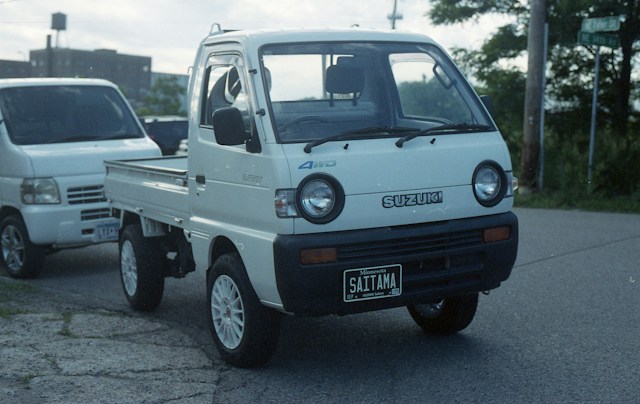
A Honda Acty or Suzuki Carry rarely breaks in a dramatic way. Owners in the US tend to lose these trucks slowly, to a missed valve adjustment, an old timing belt nobody wrote down, or a cooling system that was fine in Japan and struggles on a Texas ranch in August. Almost all of the routine work fits in a home garage with metric hand tools and a floor jack.
What follows is a practical service routine for the two most common kei trucks on US farms and job sites, built from factory service intervals and the problems imported trucks actually show up with.
Read more:
Start with a baseline service on day one
An imported kei truck usually arrives with no service records you can read. Treat the first weekend as a reset: change the engine oil and filter, the air filter, spark plugs, coolant and brake fluid, and look hard at the timing belt. Dealers such as JDM Drive in San Antonio import Actys and Carrys that are already 25 years old or more, and at that age a fluid reset costs little next to the parts it protects.
Write the date and odometer reading on a card in the glovebox. Most clusters read in kilometers, so keep your log in kilometers too and avoid converting every interval.
Engine oil: small sump, short intervals
The engines are tiny and they work hard. The Acty’s E07A takes about 2.7 liters without a filter change and around 3.0 liters with one. The Suzuki F6A in most imported Carrys takes close to 2.9 liters. Both run happily on 10W-30 in warm weather, and 5W-30 helps on cold starts in northern states.
Because the sump is so small, oil degrades faster than in a full-size truck. Plan on 3,000 to 5,000 km between changes, and toward the short end if the truck idles a lot, pulls a trailer or crawls around a property in low range. Check the dipstick every couple of fill-ups. Older F6A engines can burn a little oil, and dropping half a liter from a three-liter sump is a bigger deal than it sounds.
Timing belt and water pump
Both the E07A and the F6A use rubber timing belts. The commonly cited interval is 100,000 km, and for the Acty Honda also gives a seven-year limit. On a truck with unknown history, assume the belt is due. Replace the water pump and tensioner at the same time, since they sit behind the same covers.
On the Acty the engine sits under the bed, mid-ship, so access comes from below through the service panel. On the Carry the engine sits under the seat. Neither job needs a lift, but a pair of sturdy jack stands and a crankshaft holding tool make it far less frustrating. Mark the cam and crank timing marks with paint before you pull the old belt.
Valve clearance: the job people skip
These engines use adjustable valve lash, not hydraulic lifters on most older versions. Tight valves cause hard starting, rough idle and, left long enough, burned exhaust valves. A ticking that gets louder when warm usually means loose clearance. Check it with a feeler gauge on a cold engine roughly every 20,000 to 40,000 km, and always after a timing belt job. The specs live in the factory service manual for your exact engine code, so look them up rather than trusting a forum post.
Cooling system in American heat
Kei trucks were built for Japanese roads, where long stretches at full load in 100°F heat are rare. Flush and refill the coolant every two years with a Honda or Suzuki compatible coolant at a 50:50 mix. Look at the radiator fins, which often arrive packed with dirt from years of farm use, and squeeze the long coolant hoses that run to the front radiator. Soft or swollen hoses on a 25-year-old truck should be replaced, not watched.
If the temperature needle climbs on hills, check the fan switch and the radiator cap before blaming the head gasket.
Brakes, 4WD and the parts that see dirt
Drum rear brakes collect dust and need adjustment. Pull the drums once a year, clean them and check the wheel cylinders for leaks. Change brake fluid every two years with DOT 3 or DOT 4.
On 4WD models, check the transfer case and both differentials for leaks and correct fill. The Acty’s front differential holds less than half a liter, so a slow leak empties it quickly. Grease any fittings on the driveshaft and steering joints. Engage 4WD for a minute every month so the seals and shift forks stay free.
A simple garage kit
- Metric socket set from 8 to 19 mm, plus a 10 mm and 12 mm wrench you do not mind losing.
- Feeler gauges and a spark plug socket sized for your engine.
- Floor jack, two jack stands and wheel chocks.
- Oil filter wrench, drain pan and a funnel with a long neck for the under-bed filler.
- A printed copy of the service manual for your engine code.
Keep the truck on that routine and an Acty or Carry will handle the hauling it was built for, long after the odometer rolls past numbers that sound alarming on a bigger engine.